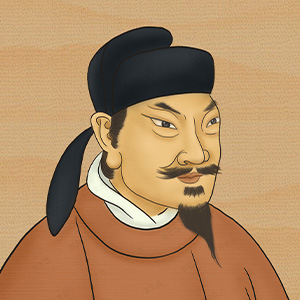
Wang Changling
王昌龄
- 分类: 语言文学
- ID: 1866683205024559105
Home CategoryLiteratureWang ChanglingPlay4 minsWang Changling (698-757) was a distinguished Tang Dynasty (618-907) poet, known for his exceptional literary talents. His career experienced highs and lows, marked by periods of political favor and dismissal.ShareCatalogue1. Early Life and Background2. Literary Contributions3. Artistic Interpretations4. Cultural Influence and Legacy5. Modern Depictions
Early Life and Background
Wang Changling (698-757) was a renowned poet of the Tang Dynasty. He was born in Taiyuan, which is present-day Shanxi province in China. He passed the imperial examinations, gaining recognition for his exceptional literary talents. His career, however, was marked by fluctuations, as he faced both political favor and dismissal.
Literary Contributions
Wang Changling is celebrated for his military-themed poetry, particularly known for his vivid and evocative depictions of frontier life and military campaigns. His works often reflect the harsh realities and emotions of soldiers in the Tang Dynasty's border regions. His skillful use of imagery and language has earned him a prominent place among the poets of his time.
One of his most famous poems is On the Frontier, which vividly captures the desolation and turbulence of life on the Tang Dynasty's borders. This poem has inspired various artistic interpretations, including a series of illustrations that depict solemn and desolate frontiers, soldiers on expeditions celebrating festivals, and the majesty of historical figures such as General Li Guang.
Artistic Interpretations
The poem On the Frontier has inspired a group of illustrations that explore its themes and imagery. The illustrations aim to convey the desolate and chaotic world described in the poem, with mountains and rivers depicted as shaking to highlight the turmoil of the era. The use of dark tones in these artworks emphasizes the oppressive nature of military campaigns and the tragic outcome often faced by soldiers, as described in lines such as "The Long March, with no one returning."
In these illustrations, black smoke is added to symbolize the rising smoke on battlefields, enhancing the sense of conflict and tragedy. The contrast between the dynamic natural elements and the stillness of the people underscores the poem's exploration of war's cruelty and the resulting unrest.
Cultural Influence and Legacy
Wang Changling's poetry has had a lasting impact, remaining an integral part of Chinese cultural and educational traditions. His works are often recited by students as part of their education in Chinese literature. Wang Changling's poems are celebrated for their deep emotional resonance and their ability to capture the spirit of the times.
His influence extends beyond literature into visual arts and popular culture. For instance, his poem On the Frontier was featured in a children's arts festival in Beijing, where students read and performed his work, illustrating its ongoing relevance and appeal.
Modern Depictions
Wang Changling is also depicted in the animated film Chang'an, a cinematic portrayal that brings to life the rich cultural landscape of the Tang Dynasty. The movie features prominent Tang poets, including Li Bai, Du Fu, Gao Shi and Wang Changling, and explores the interplay of their personal and literary journeys within the broader historical context of the era.
The film highlights the bustling cities, vibrant cultural scenes, and the military and political dynamics of Wang Changling's time. It showcases the influence of poets like Wang Changling on the social and cultural fabric of the Tang Dynasty, encapsulating their contributions within the grand tapestry of the period's history. Article reference1. On the Frontier. chinaservicesinfo.com. 20242. On the Frontier • Chapter One. chinaservicesinfo.com. 20243. Well-versed epic. seeyangzhou.com. 2023Photo Gallery(7 pictures)CategoriesLiteratureTagHistorical FiguresChinese PoetryRelatedChang'an (Film)Catalogue1. Early Life and Background2. Literary Contributions3. Artistic Interpretations4. Cultural Influence and Legacy5. Modern Depictions- - - []








